Meet the insect
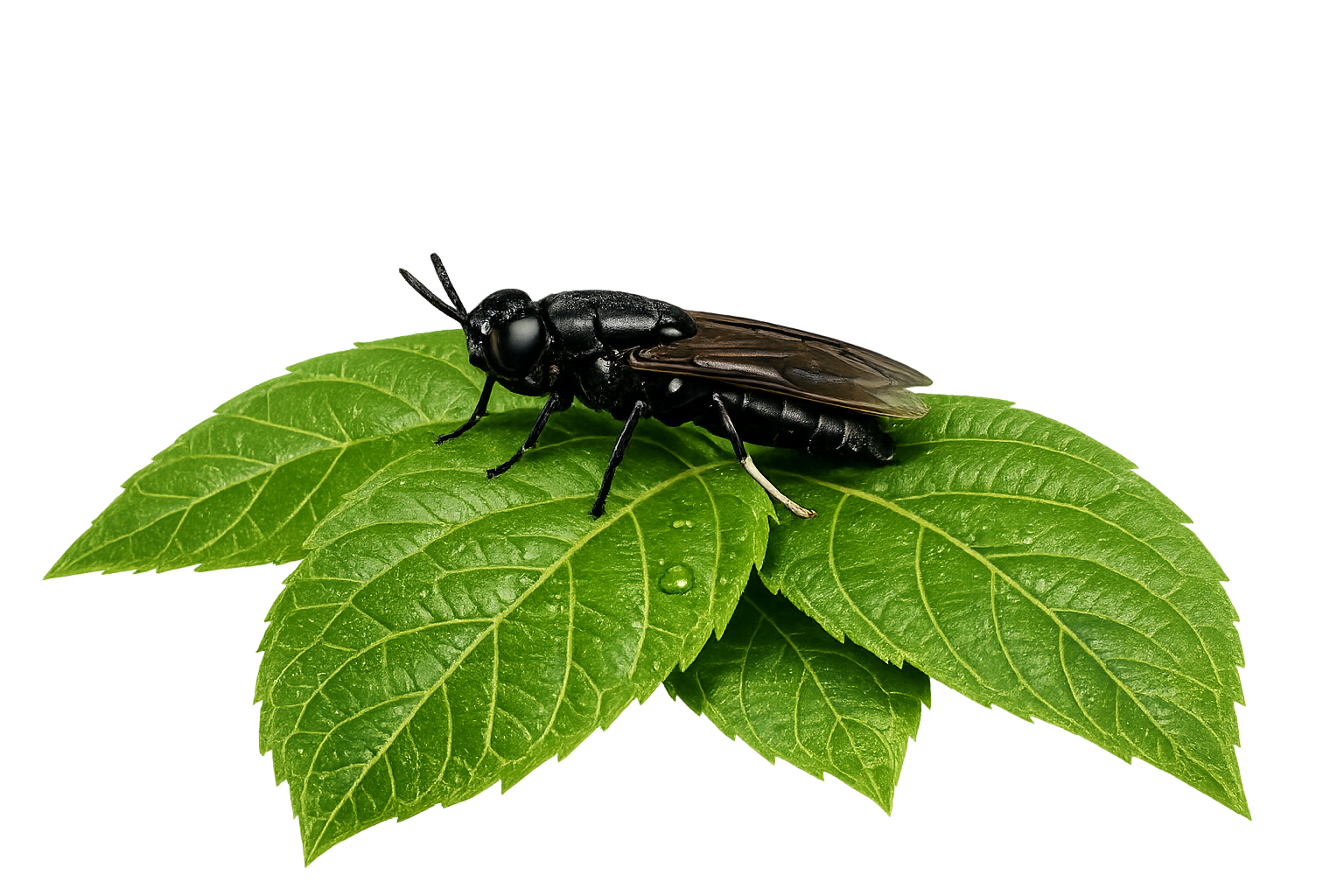
Hermetia illucens — the quiet workhorse of the farm.
A beneficial insect used for waste management, animal feed and organic fertilizer. The adults do not bite and live only to breed — the larvae do the work, eating up to twice their body weight a day, then harvesting themselves as protein-rich prepupae.
Life cycle
(40–45 days)
-
1.Egg
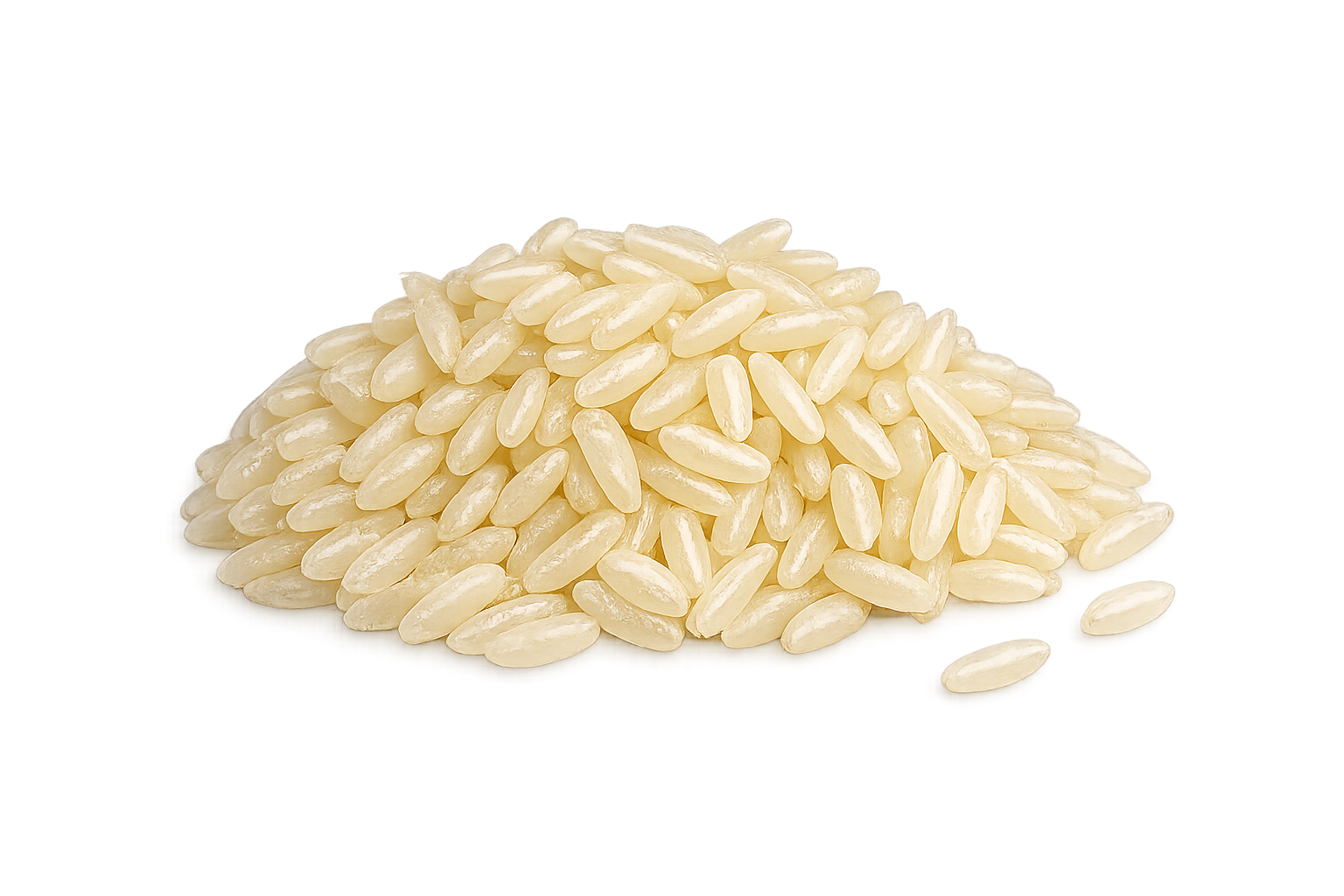
- White
- Size: ~1 mm
- Hatch in 3–4 days
-
2.Larva
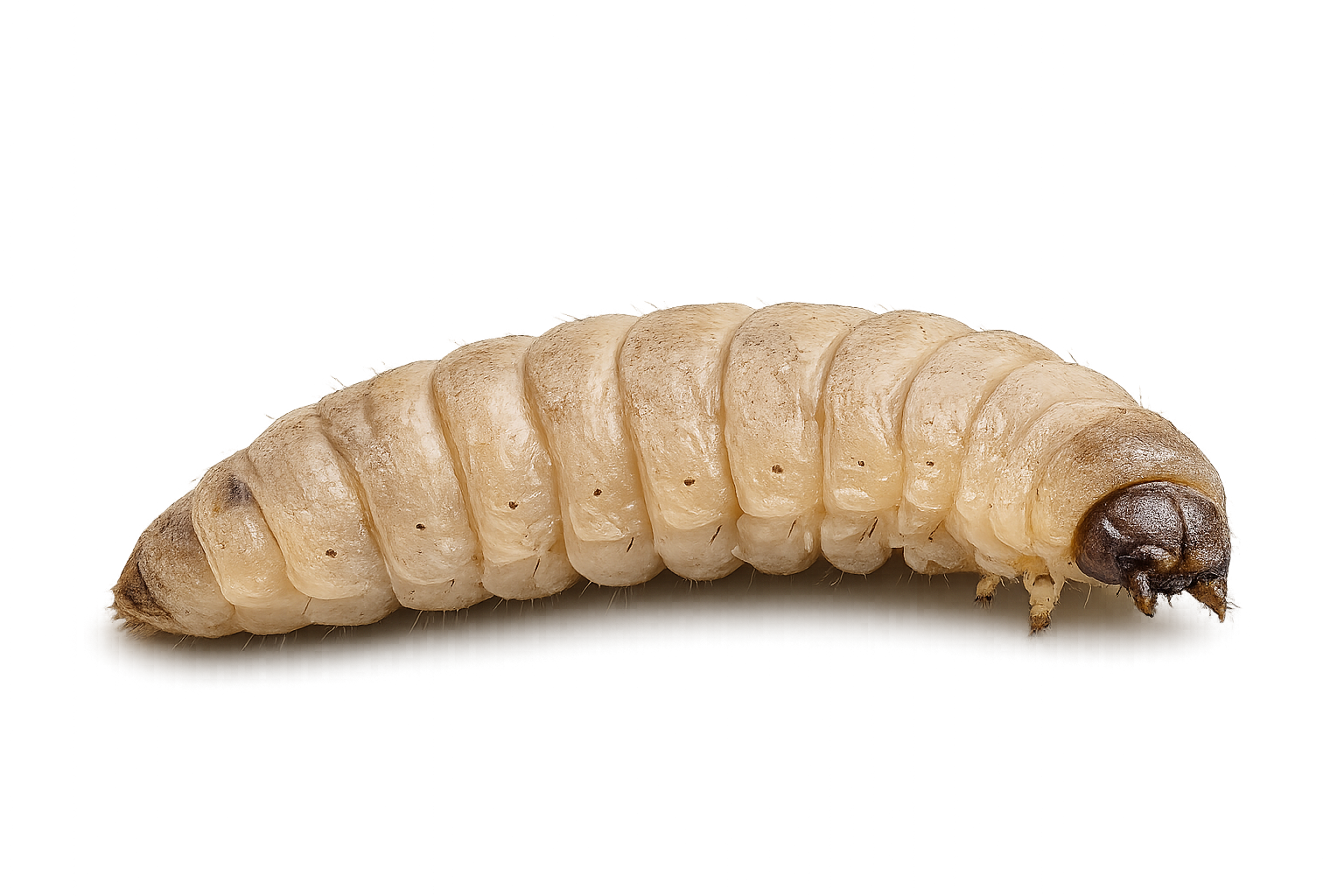
- Creamy white
- Actively eat organic waste
- 18–22 days
-
3.Prepupa
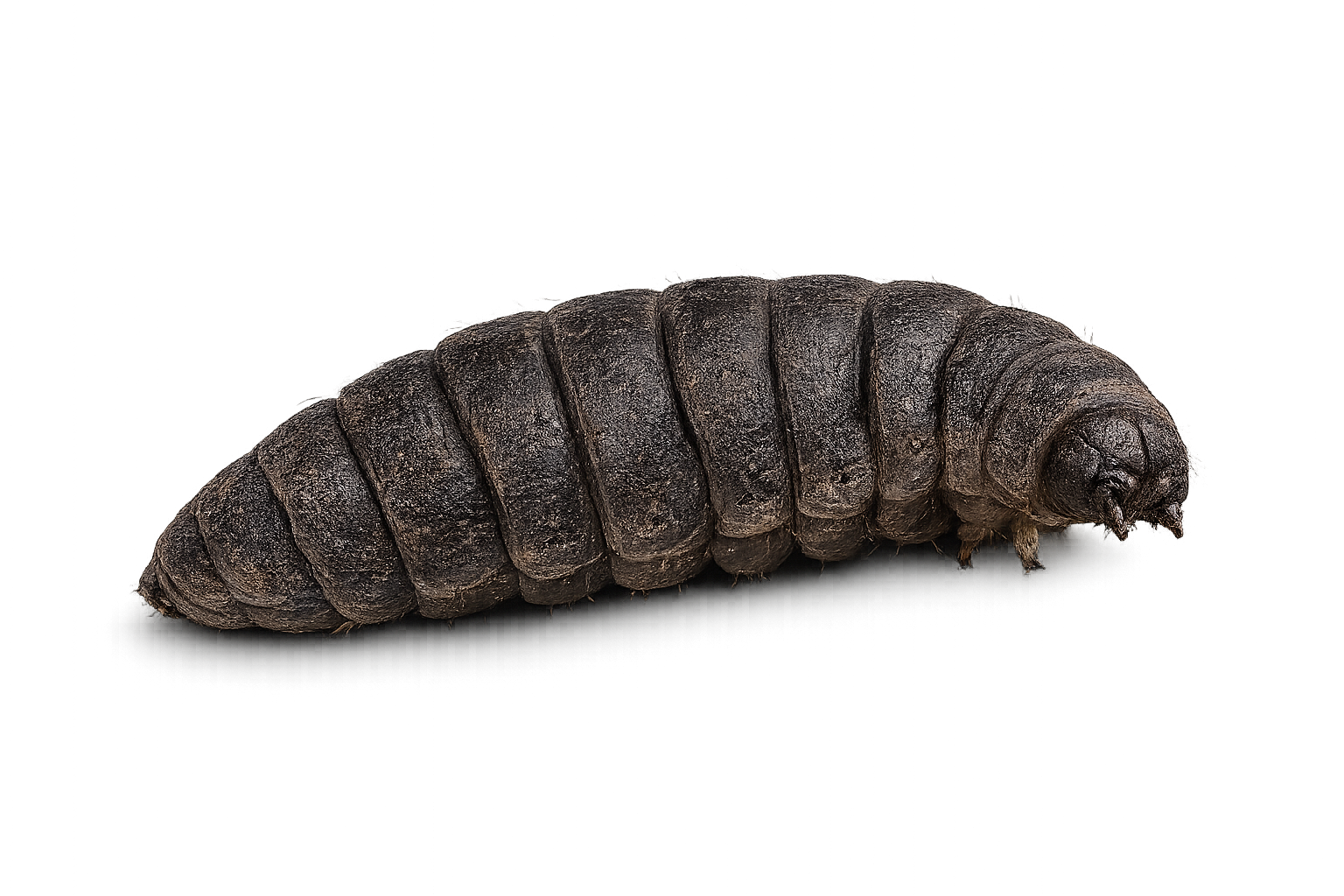
- Stop eating
- Darken in colour
- 7–10 days
-
4.Pupa
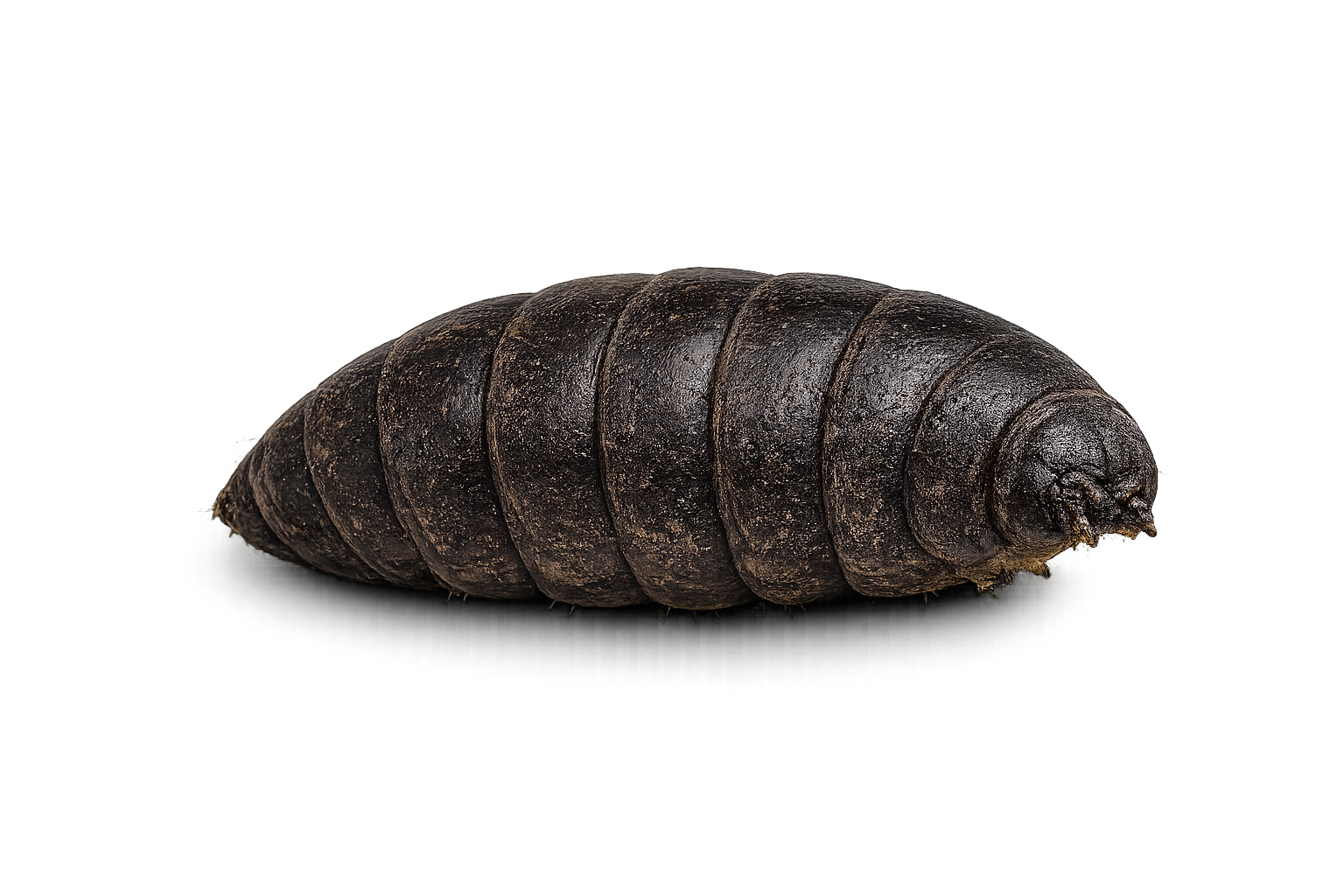
- Dark brown
- Do not move
- 7–10 days
-
5.Adult
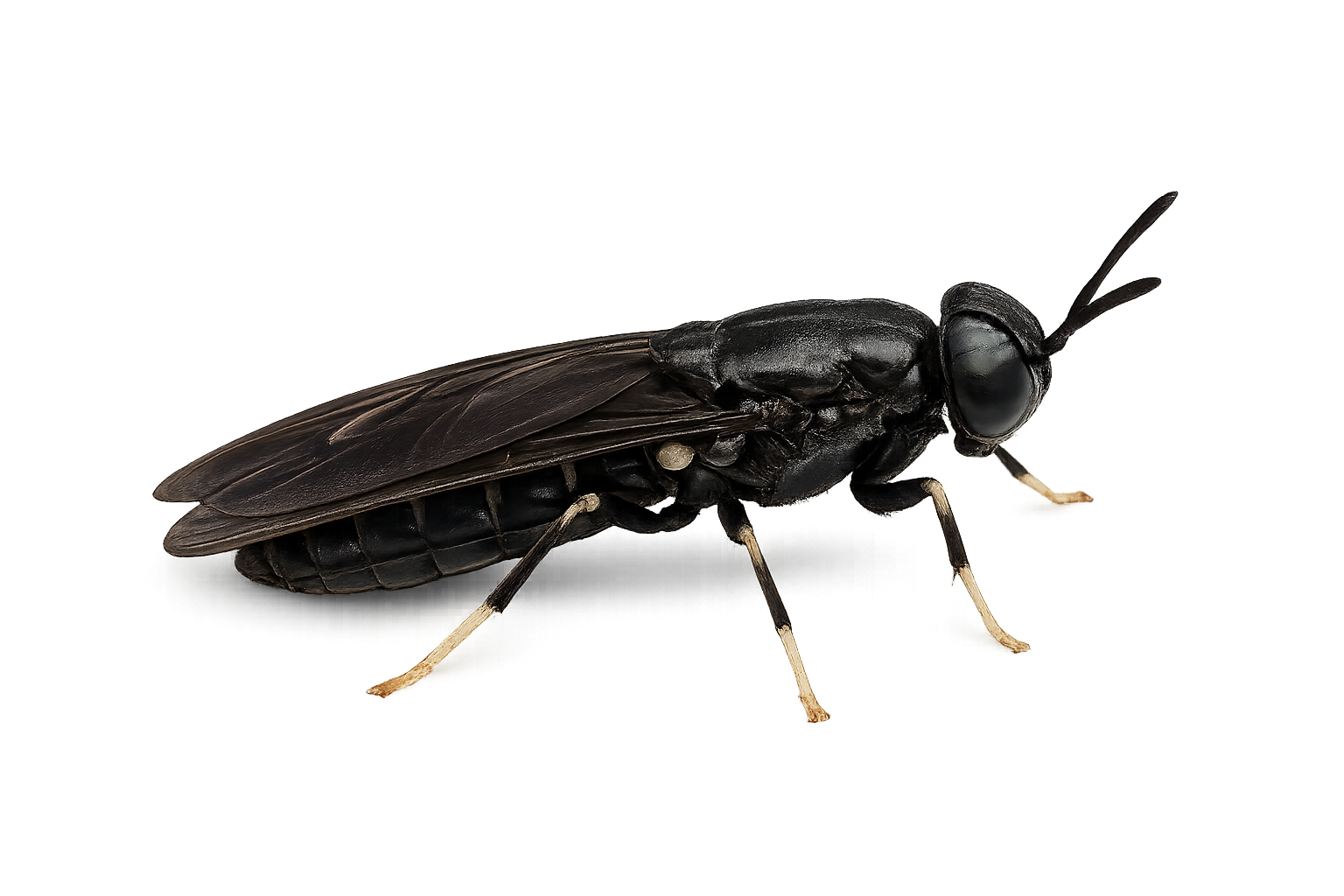
- Emerge from pupa
- Live for 5–8 days
- Breed and lay eggs
↻ Cycle repeats
Benefits
- Reduce organic waste
- Sustainable & eco-friendly
- Source of high quality protein for animals
- Can be used as organic fertilizer (frass)
Common uses
- Animal feed (fish, poultry, pets)
- Waste management
- Soil conditioner / fertilizer
- Research and biotechnology
The lifecycle
From egg to fly in about six weeks.
Five stages, one closed loop. We harvest at the prepupa stage and rear the rest into adult flies, so the cycle keeps producing the next generation on its own.
-
~4 days
01
Egg
Females lay clusters of 500–900 tiny cream-coloured eggs in dry crevices near a food source. They hatch within four days.
-
12–18 days
02
Larva
The hungry stage. Larvae feed continuously, growing from 1 mm to about 25 mm and gaining most of their lifetime weight in this phase.
-
~7 days
03
Prepupa
The larva stops eating, darkens, and self-migrates out of the feed bed. This is the harvest window — what we collect for feed and meal.
-
~14 days
04
Pupa
The prepupa anchors itself in a dry, dark place and forms a hardened shell. Inside, it transforms into the adult fly.
-
5–8 days
05
Adult fly
Adults emerge, mate within days, and the females lay the next generation of eggs — closing the loop and starting the cycle again.
↻ Loops back to stage 01
See the larvae at work.
Walk through how we feed, harvest, and turn the cycle into fertilizer, feed, and farm-grown protein.